
News
2026.5.1Blog
Discover the Depth of Shibori Dyeing in Arimatsu: Kuno Studio’s Workshop Where Craftsmanship Brings People Together
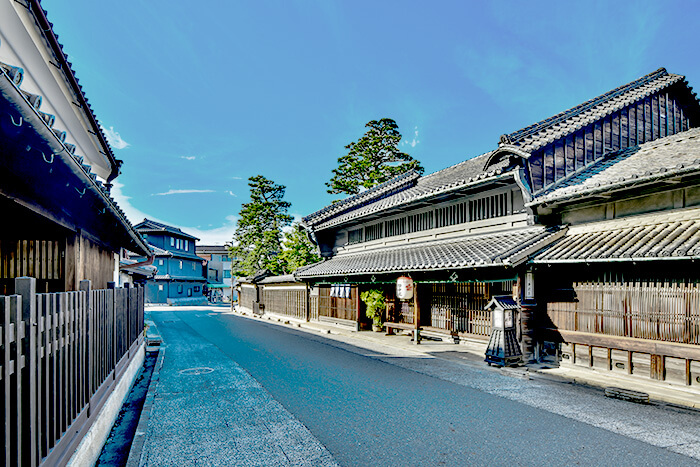
Located on the eastern edge of Nagoya, the town of Arimatsu flourished as a rest stop situated between official post towns along the Old Tokaido Road—the primary route connecting Kyoto to modern-day Tokyo. Even today, the townscape bears the imprint of its long history with shibori tie-dyeing. Arimatsu Shibori, which brought the region nationwide recognition, first developed as a souvenir for travelers. Over time, it was refined into a local industry and has been carefully passed down through generations to the present day.
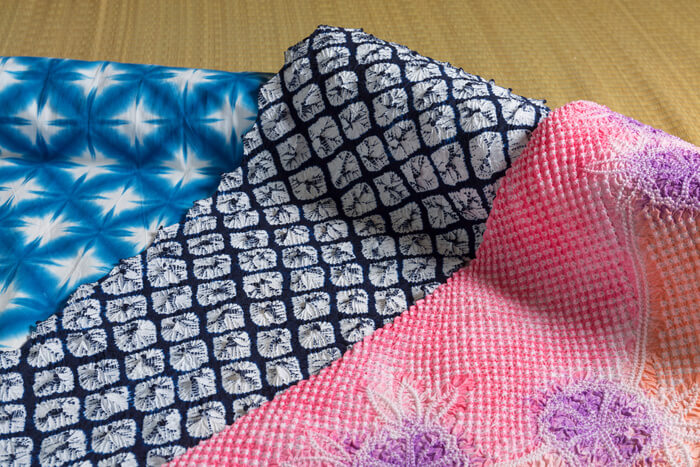
The traditional craft of Arimatsu Shibori has a history spanning over 400 years. It is defined by its remarkable variety of techniques—said to exceed one hundred in number—including binding, stitching, clamping, and folding the fabric. Each piece is made by hand, resulting in intricate, three-dimensional textures of creases and pleats. No two works are ever exactly alike, giving each creation its own distinctive character.
The workshop offered by Shibori-Dyeing Kuno Studio is far more than a simple hands-on craft session. It is designed as a “story-rich experience,” where history, culture, craftsmanship, and even the personalities of the artisans come together into a single, immersive encounter. Participants have the rare chance to learn directly from active master artisans right on the workshop floor. This intimate setting makes the experience truly special.
The story of Arimatsu Shibori also intersects with the broader historical narrative of Nagoya itself. The city is famously associated with three of Japan’s great unifiers: Oda Nobunaga, Toyotomi Hideyoshi, and Tokugawa Ieyasu. It carries a legacy shaped by centuries of tradition dating back to the Edo period, continuing into contemporary craftsmanship today. This workshop is situated along that continuum, offering not just a way to see Nagoya, but to understand through lived, authentic experience why such a rich cultural heritage took root and flourished in this region.
Learn from Practicing Artisans in an Authentic Workshop
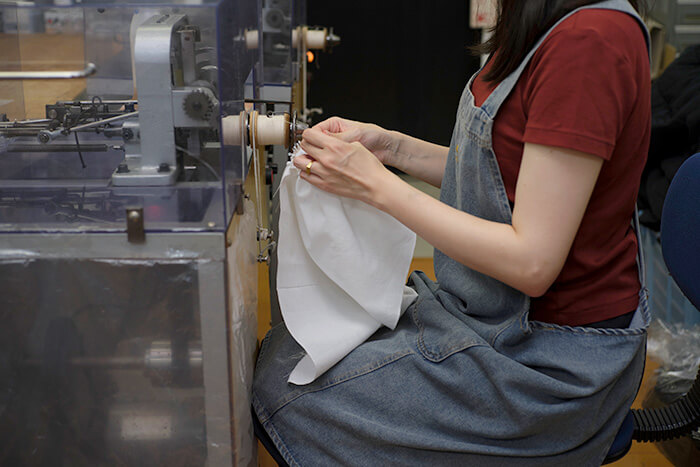
One of the most striking aspects of the experience at Kuno Studio is that it takes place not in a simplified, tourist-oriented setting, but in a real workshop where craftsmanship is actively practiced. Participants are are guided closely by practicing master artisans right in Arimatsu, the capital of shibori dyeing. This alone makes the experience exceptionally valuable.
The movements of an artisan’s hands and their handling of tools: these can be truly appreciated by observing them up-close. Participants gain insight not only into the finished product, but into the techniques themselves, including how the fabric is manipulated, what the artisans assess at each stage of the process and where their years of experience shine through. Even the subtle timing and intuitive sensibilities can be experienced firsthand, deepening one’s understanding of the craft.
The workshop is carefully structured not as a simple activity, but as a clear progression from understanding to hands-on experience to completion. Participants often remark on how engaging the artisan’s presentation and storytelling are, and how easy it is to ask questions. With a solid grounding provided at the outset, any uncertainties can be quickly resolved, making it easier to move confidently into the creative process. It is a thoughtfully designed program that supports both learning and making.
Tracing the Roots of Arimatsu Shibori Along the Old Tokaido
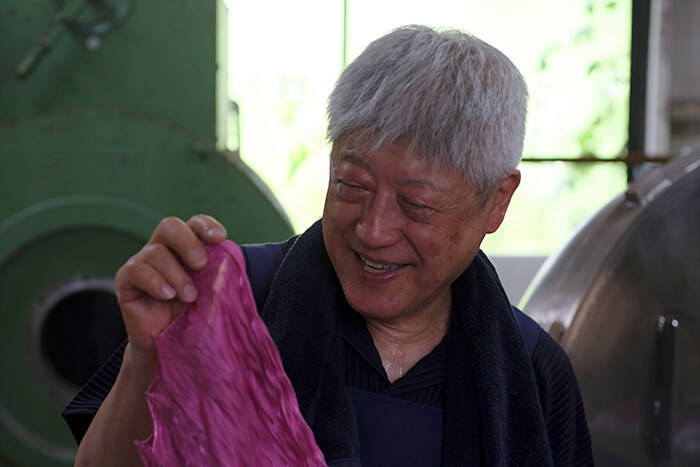
At the beginning of the workshop, the president of Kuno Studio gives a presentation introducing the history and techniques of Arimatsu Shibori, as well as the reasons it developed in this particular region. With this context in place, participants begin the hands-on portion with a deeper sense of meaning.
Arimatsu Shibori first spread during the Edo period as a popular souvenir for travelers journeying along the Old Tokaido Road. Under the protection and regulation of the Owari Domain, production was concentrated within designated areas, preventing the circulation of inferior goods while establishing a reputation for consistent quality. With this, “Arimatsu Shibori” became synonymous with excellence. This was not simply a craft that survived the passage of time, but one whose brand value was consciously cultivated by the entire community. In many ways, it can be seen as a highly sophisticated business model of the Edo period.
This historical background is also highly accessible for international visitors. Framed within the era of travelers along the Tokaido—the age of the samurai—and connected to the broader history of Nagoya, the story adds a compelling narrative dimension to the experience.
From Understanding to Creation: A Clearly Guided Experience
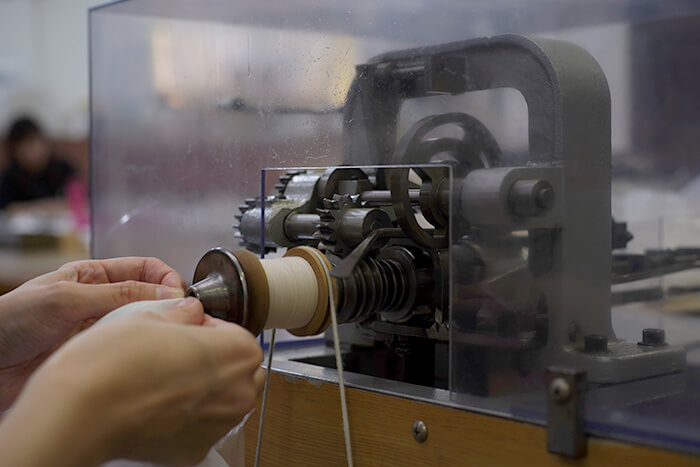
After learning the background, participants watch a live demonstration by an artisan, gaining a visual understanding of the process and a clear image of the final result. This careful introduction helps ensure that even first-time participants feel at ease.
Participants then begin their own creative process. The material used is 100% pure silk, made in Japan. Using traditional shibori techniques, they manipulate the fabric, selecting their own designs and colors as they shape their piece. With a high degree of creative freedom, no two works are ever the same, even among participants in the same session.
Shibori is built on a series of seemingly simple steps: binding, stitching, and clamping. Yet even when the same technique, dye, and artisan are involved, no two outcomes can ever be identical. This unpredictability is precisely what makes Arimatsu Shibori so fascinating. Many participants describe the excitement of not knowing exactly how the piece will turn out until the very moment it is unfolded; a feeling that captures the essence of the craft.
Once completed through the final finishing process, the piece can be taken home immediately. It is not merely a souvenir, but a creation shaped by one’s own hands. This workshop provides a tangible memory of the journey, made visible in cloth.
Beyond Learning: A Workshop Enriched by Observation
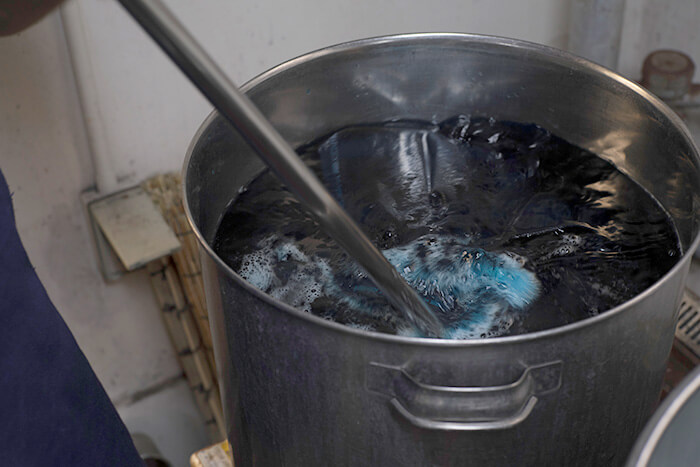
This program extends beyond the act of making. In addition to the hands-on workshop, participants are invited to tour the studio and view completed works. Seeing firsthand the environment in which these textiles are created reveals both the scale and the depth of traditional craftsmanship. Rather than ending with the experience itself, the program encourages a more layered understanding; one that comes from observing the workspace.
Participant feedback highlights how fascinating it is to see the studio and the range of works produced there. The workshop expands beyond the task at hand, opening a window onto the broader world of craftsmanship and artistic production. This added perspective deepens the overall experience in a meaningful way.
Equally compelling is the way Kuno Studio engages not only with tradition, but with contemporary expression. Through collaborations with brands such as ISSEY MIYAKE and Yohji Yamamoto, contributions to interior design, costume production for “Super Kabuki” performances, and commissions from luxury hotels in Nagoya, the studio continues to reinterpret traditional techniques within a modern context. It is a vivid example of how heritage crafts remain dynamic and evolving.
Sustainable, Personal, and Resonant for Today’s Travelers
The appeal of Arimatsu Shibori lies not only in its history or the beauty of its techniques. Its potential as a form of upcycling: breathing new life into materials that might otherwise go unused. This adds another layer of relevance, particularly for today’s environmentally-conscious travelers. Visitors from Europe and North America, in particular, often find themselves drawn to this sustainable dimension of the craft.
At the same time, each finished piece is deeply personal. The colors and designs chosen by the participant ensure that each work is one-of-a-kind. In contrast to mass production, what emerges here is something singular. More than just a souvenir from Nagoya, it becomes a piece one has actively created, making the experience even more memorable.
What Lingers Is Not Just the Craft, but the People

Ultimately, the greatest strength of this workshop may lie in the human connections it fosters. The warmth and character of the Kuno family, along with the atmosphere of the studio itself, become an integral part of the experience. Participants come away not just with knowledge, but with a felt understanding of Japanese craftsmanship.
Nagoya is a city shaped by the legacy of Japan’s three great unifiers, enriched by traditional crafts like Arimatsu Shibori, and sustained by a vibrant culture of contemporary craftsmanship. Opportunities to grasp these connections through a single, cohesive experience are rare. This workshop is not only something that can be done here; it is something that gains meaning because it is here. It offers, in a very real sense, one answer to the question: What is Nagoya?—an answer through the act of making.
What remains after the experience is not just the finished piece. It is the memory of listening to the artisan’s stories, of walking through the studio, of binding the cloth and imagining how the dye would take hold as you waited. These moments accumulate, and through them, the culture of Arimatsu Shibori becomes something personal, woven into your own memory.
 Nagoya Travel Guide